Profile
- Name:
Juan-Carlos Fernández
- Professional background:
Engineering and digital transformation professional based at Bosch in Stuttgart.
- Place of assignment:
The Pontifical Catholic University of Ecuador (PUCE)
- Duration of assignment:
3 Weeks
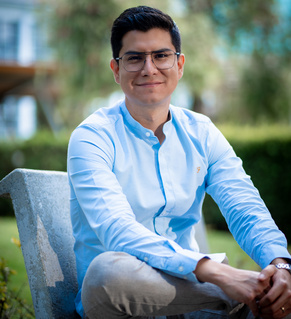
Juan-Carlos Fernández
Bridging the gap between academia and the labour market
Born in Quito, Juan-Carlos Fernández is an alumnus of the local German School and moved to Germany over 15 years ago to pursue his higher education at Karlsruhe University of Applied Sciences. Following his graduation, he built a career in Stuttgart as an expert in digitalisation and innovation within the Central Department for Fiscal and Customs Affairs at Bosch. Through the Diaspora Experts initiative, Juan-Carlos returned to his country of origin for a short-term assignment to share his expertise in digital transformation with academic staff members at the Pontifical Catholic University of Ecuador. To support educators bridging the gap between theory and practice, Juan-Carlos organised an event that brought the university into direct contact with industry representatives. During this event, he held a presentation on digitalisation where he addressed the practical challenges of managing technological shifts, discussed how to navigate the apprehension often associated with new systems, and outlined the necessary steps to initiate structural change within an institution.

Improving long-term employability
The objective of this training extends beyond immediate capacity building. By equipping teachers with current digital strategies, Juan-Carlos' assignment enables students to learn the relevant tools required by today's employers, thereby directly improving their long-term employability.
Furthermore, his assignment highlights how digitalisation can serve as a practical instrument for sustainable development. The mission shows the positive impact that digital innovation can have on universities – an example that can be followed across Ecuador’s education landscape.
What motivated me most to join the programme was having the opportunity to return to my country. I wanted to share what I learned during my education in Germany and, in some way, contribute to the country's development
Further information on the offers available to the Ecuadorian diaspora can be found below.