Healing Through Art
The war in Ukraine is causing deep psychological scars. Together with a Ukrainian partner organisation, the diaspora organisation Vitsche is using art therapy to help people process trauma and regain resilience.
Profile
- Name of the diaspora organisation:
Vitsche e.V.
- Partner country:
Ukraine
- Main location of the organisation:
Berlin
- Website:
- Funding period:
2024-2025
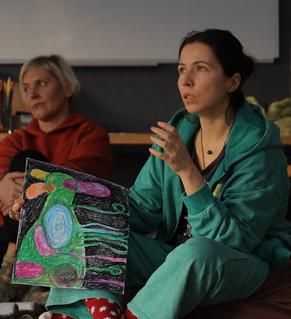
Since the start of Russia’s invasion, Ukraine has been facing a growing mental health crisis. Around 65 per cent of the population experiences high levels of anxiety and hospital admissions for psychiatric disorders have risen sharply. Displacement, loss and constant insecurity have left many people struggling to cope and find stability amid the ongoing war.
At the same time, access to psychotherapy remains limited. There is a chronic shortage of mental health specialists and stereotypes discourage many from seeking help. For some, therapy carries stigma; for others, speaking about trauma feels unbearable.
Art as a Therapeutic Approach
The Berlin-based diaspora organisation Vitsche e.V. and its Ukrainian partner organisation view art therapy as a valuable alternative to conventional psychotherapy, offering two key advantages. First, it allows participants to process trauma through creative activity without having to verbalise painful experiences. Second, it offers easier access, as it is often perceived as less stigmatising and more approachable than classical therapeutic settings.
Art therapy uses creative processes such as painting, movement or sculpting to help individuals express emotions and regulate stress. For people who struggle to articulate their pain, creating something tangible can restore a sense of agency and self-efficacy.
Training Multipliers for Long-Term Impact
Building on this approach, Vitsche partnered with a performing-arts focused NGO in Ukraine to launch the project “Art Therapy for Resilience and Healing”. After the invasion, the organisation had already transformed its cultural festivals into intensive art residencies. With Vitsche’s support, this concept was further developed into a professional art therapy training programme.
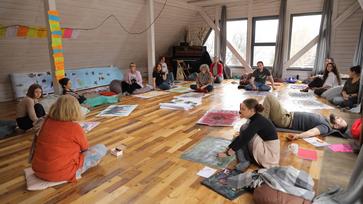
A ten-day residency was organised in the Ukrainian countryside, bringing together artists, art therapists and mental health professionals. As qualified instructors are scarce in Ukraine, Vitsche facilitated cooperation with two German universities, whose faculty members joined the residency as instructors.
Interest in the programme was overwhelming. A total of 254 applications from across Ukraine were submitted, nearly 17 per available place. Ultimately, 15 participants were selected: psychologists, art therapists, artists, social educators and social workers. They were trained by ten experienced facilitators from Ukraine and Germany in an intensive programme combining theory and hands-on practice.
From Training to Therapeutic Practice
Participants learned to guide therapy clients through creative processes, such as shaping clay objects representing a “safe place”. These techniques allow clients to process trauma indirectly, while strengthening emotional regulation and personal resilience. One residency participant noted that clay work was particularly well received by men who had previously resisted drawing or colouring.
The residency was designed with a multiplier effect in mind. The vast majority of participants now use the techniques regularly in their professional practice. Together, they already reached more than 540 indirect beneficiaries, including internally displaced persons, children, veterans, young people and civilians affected by the war.
Building on this success, the Ukrainian partner organisation is now independently securing additional funding to expand art therapy residencies and organise smaller programmes in central and frontline regions, where psychosocial needs are especially acute.
Online lectures
Three lectures were also published on the partner organisation’s YouTube and Instagram, and Facebook channels/pages to afford a wider audience access to some of the knowledge and skills imparted in the residency. These were the lectures How to work with a traumatized society? Healing through art, Mechanism of injury, 5 F: fight, flight, fawn, freeze, flop, and Use of art therapy in communities, all given in Ukrainian.
Further information on the offers available to the Ukrainian diaspora can be found below.