Embroidering opportunities between Ecuador and Germany
From the Andean community of La Esperanza, in Ecuador's Imbabura Province, three business partners are leading a venture to give greater visibility and value to the traditional embroidery of Kichwa Indigenous women. Their aim is to turn this craft into a source of opportunities and development.
Profile
- Names:
Karen Noboa, Luisa Valecillo and Jessica López
- Business idea:
Create hand-embroidered garments and accessories by Kichwa Indigenous women
- Company name:
Samillari
- Website:
Instagram: @samillari.ec
- Main business site:
Ecuador
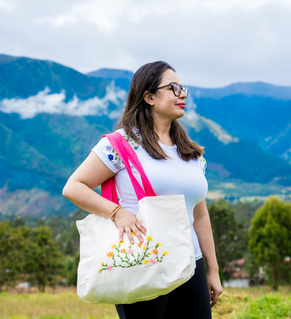
Karen Noboa, one of Samillari's three founders
Embroidering opportunities and strengthening identities
Samillari was born in the rural parish of La Esperanza, in Ibarra, Ecuador, an area which around 12 Indigenous communities call home and where embroidery is part of everyday life. Although both women and men practice this activity, the business places special emphasis on empowering Indigenous women: structural inequalities make it harder for them to access income and recognition. Samillari wants to empower them, support them to preserve this tradition, and give their voices a platform.
Behind Samillari are three business partners: Luisa Valecillo and Karen Noboa, who live in Ecuador, and Jessica López, who has lived in Germany for approximately 30 years. Their collaboration shaped an idea that connects both countries and seeks to bring the embroiderers’ work to new markets.
The name of the business is Samillari; it is a Kichwa word that we combined and that means ‘the light that brings well-being and abundanceSamillari already has its first pieces: garments such as shirts and blouses, as well as handbags and cosmetic pouches. Each one is handmade with attention to detail. No garment is mass produced, and each piece requires time and precision, from the choice of thread to the final finishing touch.
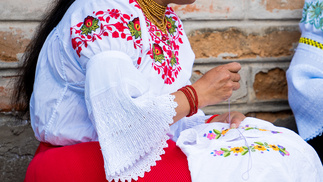
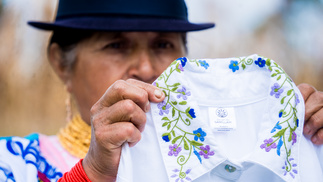
Currently, between five and six people participate as embroiderers at Samillari. For Luisa, Karen, and Jessica, this represents an opportunity to contribute to the economy of families in the community and, in the future, to expand the network of embroiderers who are part of Samillari.
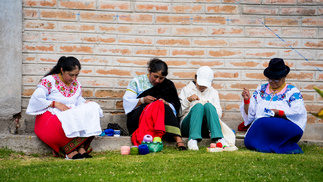
For Samillari, the process also involves learning and sharing knowledge. The partners are inspired by the Kichwa principle “Randi Randi,” understood as a “give-give”: a logic of reciprocity and collaboration that reflects how they want to build the venture and their relationship with the women of the community. GIZ’s support, through the initiative “Business Ideas for Development,” has accompanied the business since its early stages; from developing the idea to aspects related to improving production and marketing.
With a forward-looking vision, the partners hope to build an ever-growing community of embroiderers who can participate in Samillari and strengthen their economic opportunities. In the words of the business itself, each garment aims to be much more than a product: “it weaves opportunities, strengthens identities, and connects cultures
Further information on the offers available to the Ecuadorian diaspora can be found below.