Vietnamese diaspora for ethical labour migration
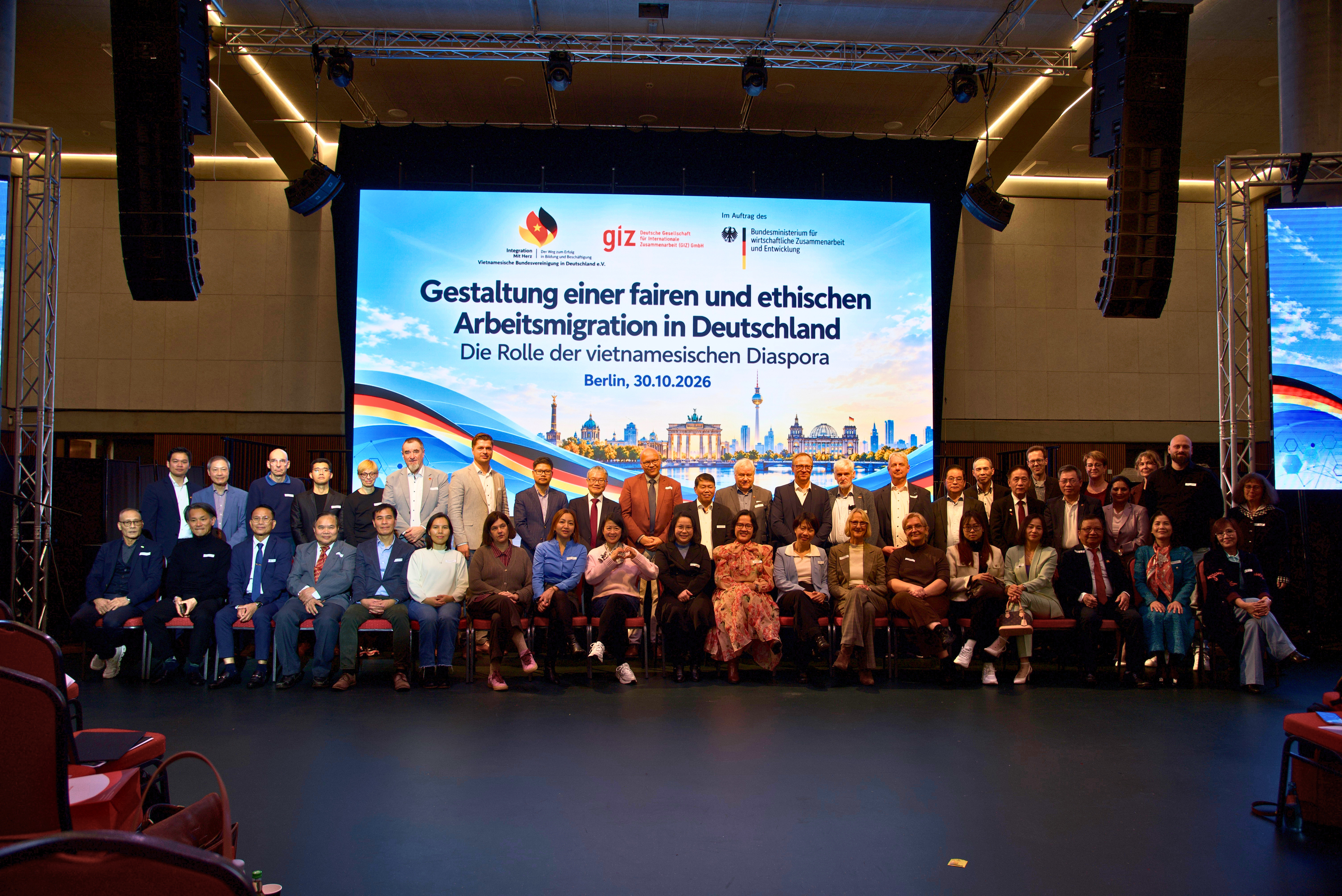
The Association of Vietnamese in Germany (VBD e.V.) brought together more than 100 representatives in Berlin for a conference on fair and ethical labour migration. Under the title “Building a Fair and Ethical Labour Migration Model in Germany: The Role of the Vietnamese Diaspora”, participants explored how to improve support for Vietnamese migrant workers in Germany.
In 2025, more than 16,000 people in Viet Nam applied for visas to travel to Germany seeking to undertake vocational training, according to Prof. Dr Tuấn Nguyễn of the University of the Federal Employment Agency.
These figures highlight the scale of migration between the two countries and the importance of reliable information and preparation for those planning to move. But: “Labour migration is about more than signing an employment contract. It is a complex process,” highlights Prof. Dr Nguyễn Xuân Thính, Acting President of the VBD.
His words captured a central theme of the conference: support should extend beyond recruitment and continue throughout the migration and integration process. That is why participants discussed how the Vietnamese community in Germany could draw from its experience, resources and networks to strengthen the support for newcomers and better coordinate existing initiatives.
Supporting migrant workers throughout the process
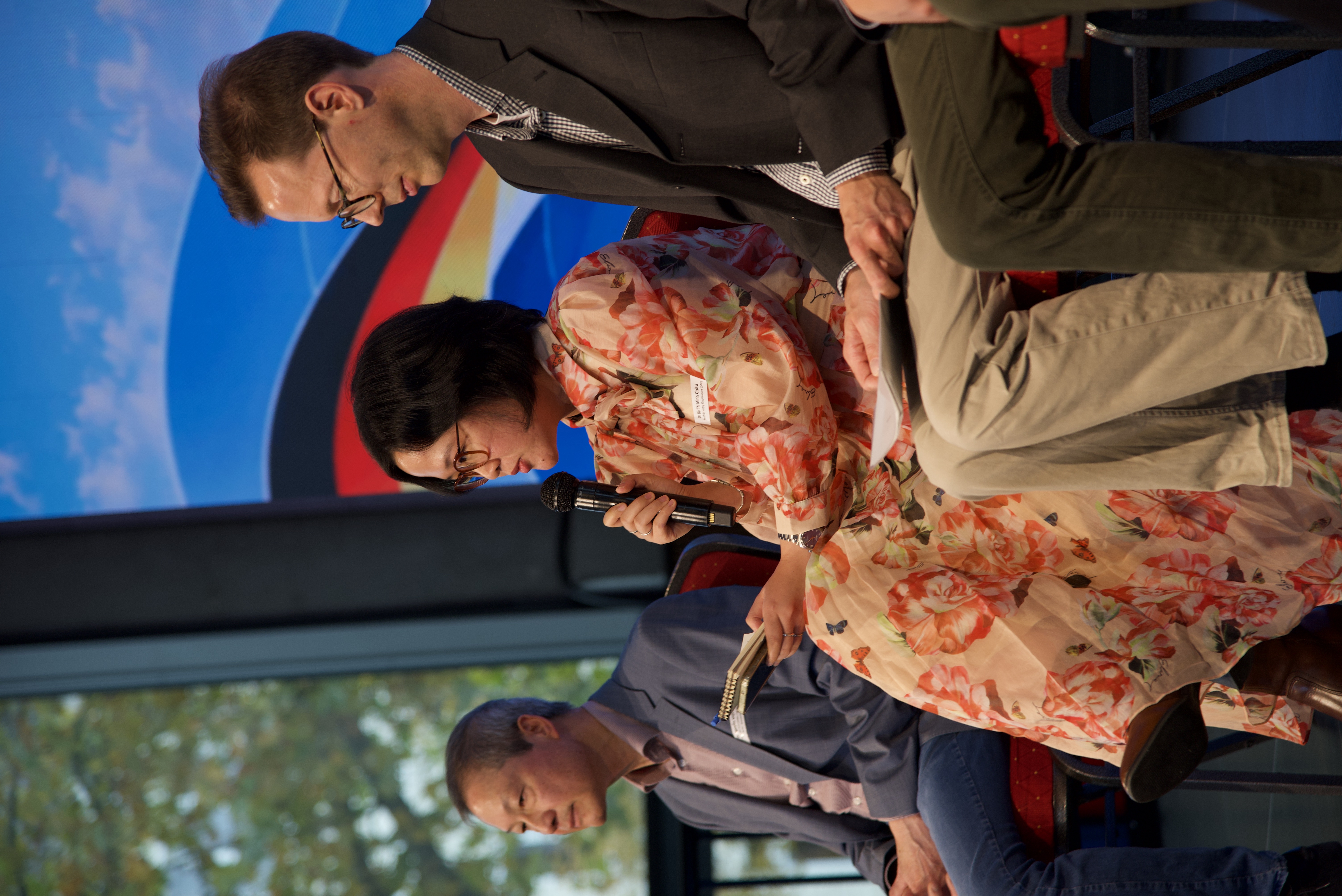
Dr Thi Minh Chau Bui
Dr. Thi Minh Chau Bui of the Diaspora Advisory Committee highlights what would be required to involve the diaspora strategically:
“Ensuring fair and ethical labour migration from Viet Nam to Germany requires shared responsibility and coordinated efforts from both countries. Diaspora organisations and communities should be recognised not merely as providers of support services, but as strategic partners in shaping migration policies, bringing valuable insights into structural challenges and practical solutions. For their contributions to be meaningful and sustainable, they need genuine opportunities to participate in policymaking processes, alongside adequate financial and technical support to realise their initiatives. Such partnerships can benefit both countries of origin and destination, while ensuring that the rights and well-being of migrant workers and apprentices remain at the centre.”
- Dr Thi Minh Chau Bui, Member of the BMZ Diaspora Advisory Committee
During the event, representatives from several diaspora organisations, the Vietnamese Embassy in Germany, the German Hotel and Restaurant Association (DEHOGA), recruitment agencies, civil society and academia discussed key challenges at different stages of the migration process. These include cooperating with unreliable recruitment agencies, working in precarious conditions and overcoming the language barrier.
Sharing experiences across diaspora communities
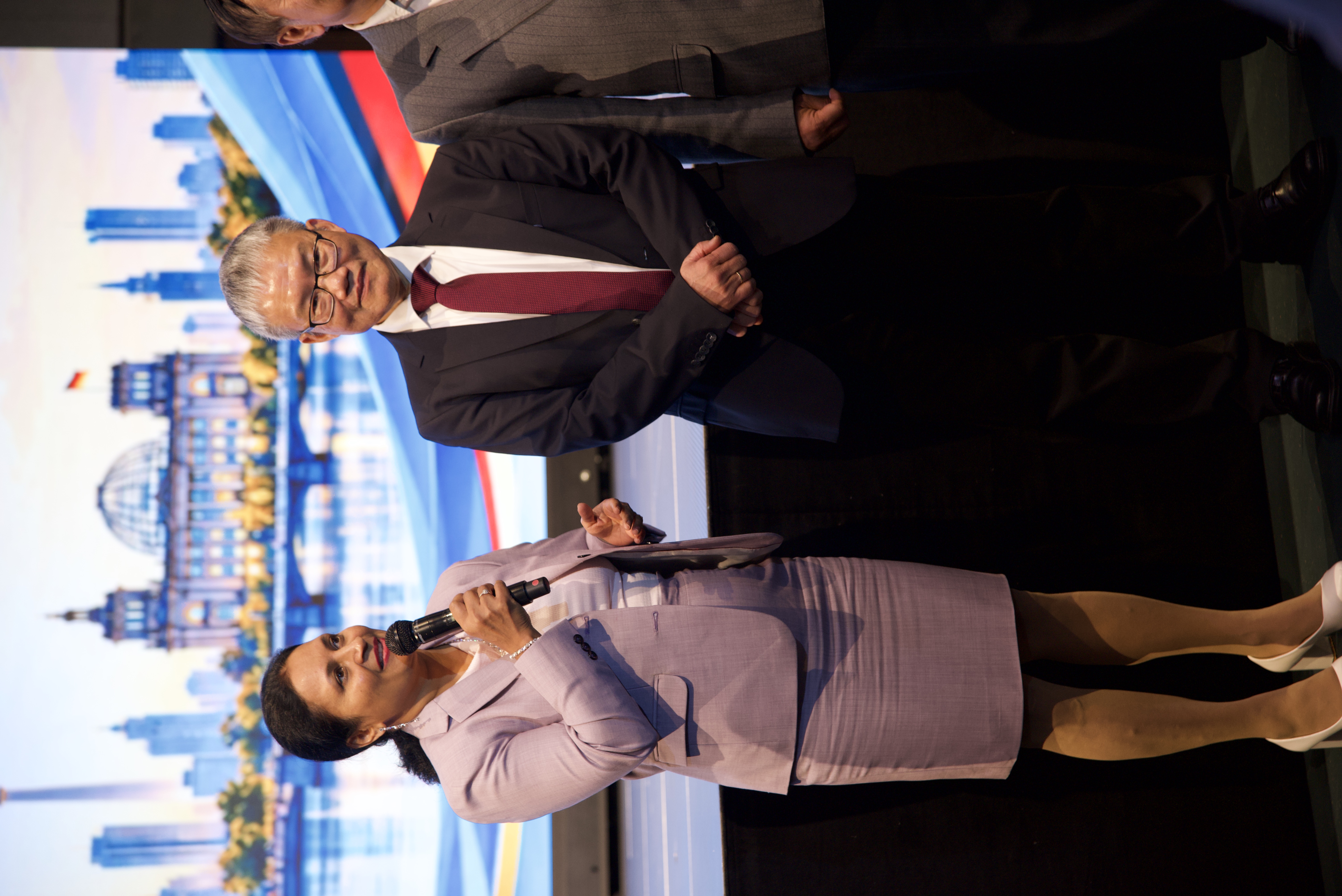
Vijaya Chippadi (left) and Prof. Dr. Prof. Dr Nguyễn Xuân Thính (right).
Panel discussions and presentations also gave members of the diaspora an opportunity to share their experiences. Vietnamese apprentices and a representative of the Indian community, spoke about challenges they had faced during their migration journeys. Their contributions highlighted the value of cooperation between diaspora communities facing similar challenges, one being the need to find a sense of community while adapting to life in Germany. As Dr Nguyễn Việt Đức, a chair member of the VBD, put it: “Migrant workers come to Germany not only in the hope of finding work, but also in the hope of finding a sense of community that will ease their homesickness.”
Collective strength and knowledge play a major role in meaningfully engaging and integrating the diaspora community. Exchanges like this help us achieve that.
Overall, the conference demonstrated how the Vietnamese diaspora, through collective action, can support migrant workers and apprentices, promote transparent procedures, and contribute to fair and responsible labour migration to Germany. VBD aims to establish a platform that lists all available support offers for Vietnamese newcomers to Germany as well as provide vital information about working and living in Germany. When informed decisions are made, labour migration becomes fairer and more ethical – benefitting all parties involved.